Types of Scopes
It takes specialized equipment to get involved in this activity. Just as a birdwatcher needs binoculars, or an astronomer needs a telescope – a micro-naturalist needs a microscope. You may eventually wish to consider purchasing two instruments:
- a compound microscope;
- and, a dissecting stereoscope.
Options For Obtaining a Scope
Here are some strategies for obtaining a microscope and some considerations for making your choice.
- Purchase a second hand instrument: there are lots of good brand-name scopes coming up for sale these days. Many experts say that the purchase of a high quality second hand scope is the way to go. The equipment is durable, high quality and solidly built. The optics will not be disappointing, and most of them will accept a camera adapter.
- Purchase a new instrument: There are mixed opinions about new Chinese-made scopes that are often featured online. New high quality equipment from brand-name companies can be very pricey. The Chinese scopes are not as well made, but with care may provide hours of fun. They will not hold their value for later sale though.
- Purchase a digital scope: there are new relatively inexpensive digital scopes available. They are not sturdily built so will have a shorter lifespan than a microscope. They will give you a really good view of things you can see with the naked eye – but will not help you see microscopic life like protists and rotifers.
A good second-hand instrument is better than a cheap new microscope or a plastic digital scope.
The consumable supplies involved include simple materials that can be easily obtained. You will need blank slides and glass cover slips (easily obtainable) and then you are pretty much good to go. Included in the additional list of tools would be:
- slides and cover slips (get good quality ones);
- an eye dropper (pipette);
- a needle in a wooden handle;
- some fine tweezers
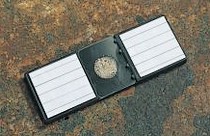
Krantz cell microscope slide
Used for larger items such as sand grains or micro-fossils
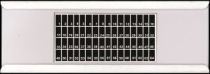
Micro-fossil slide
Used to glue tiny fossil tests of foraminifera and ostracods
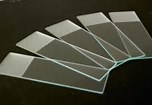
Frosted end glass microscope slide
This is the basic way to view things under the microscope. You will need a dozen of these to start with, and glass cover slips to put over the targets.